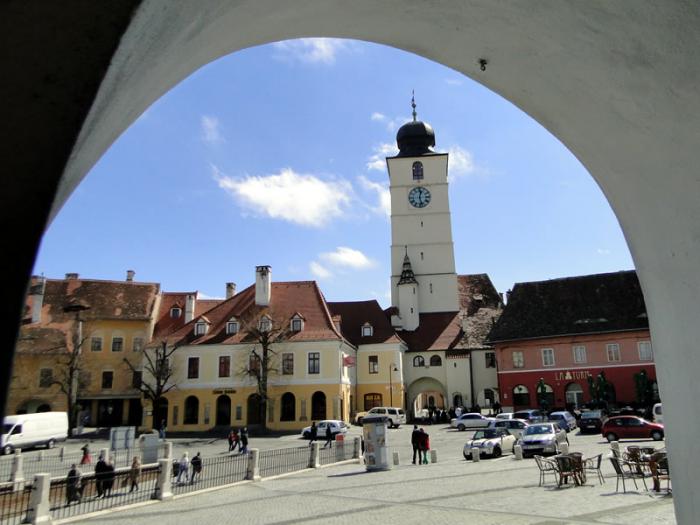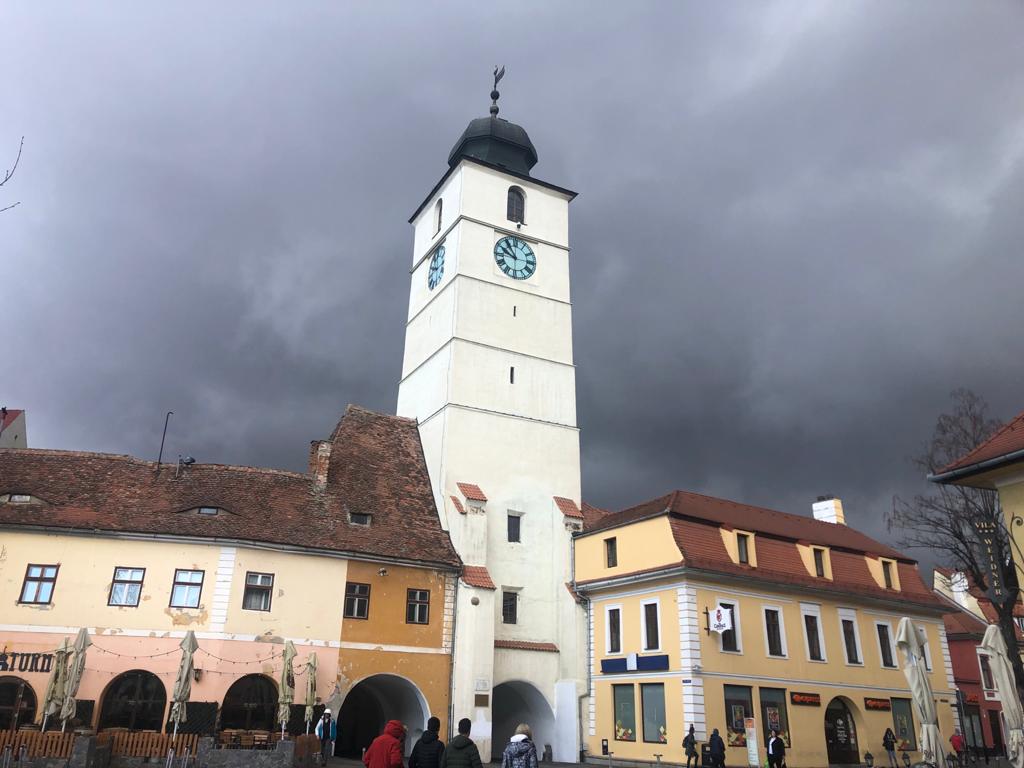
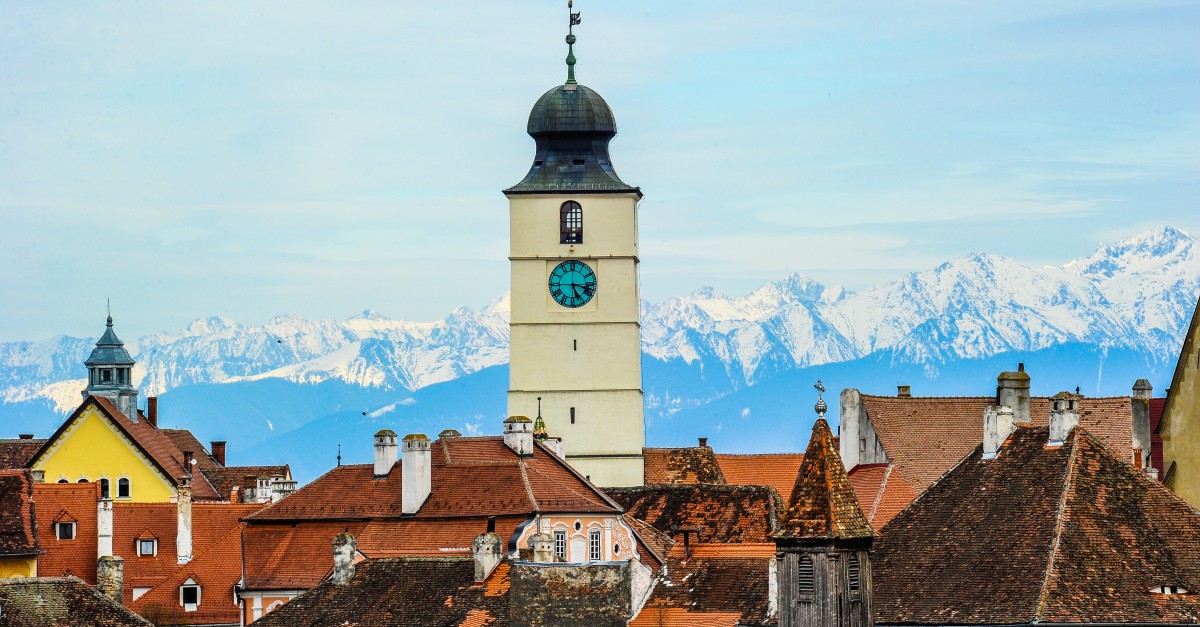
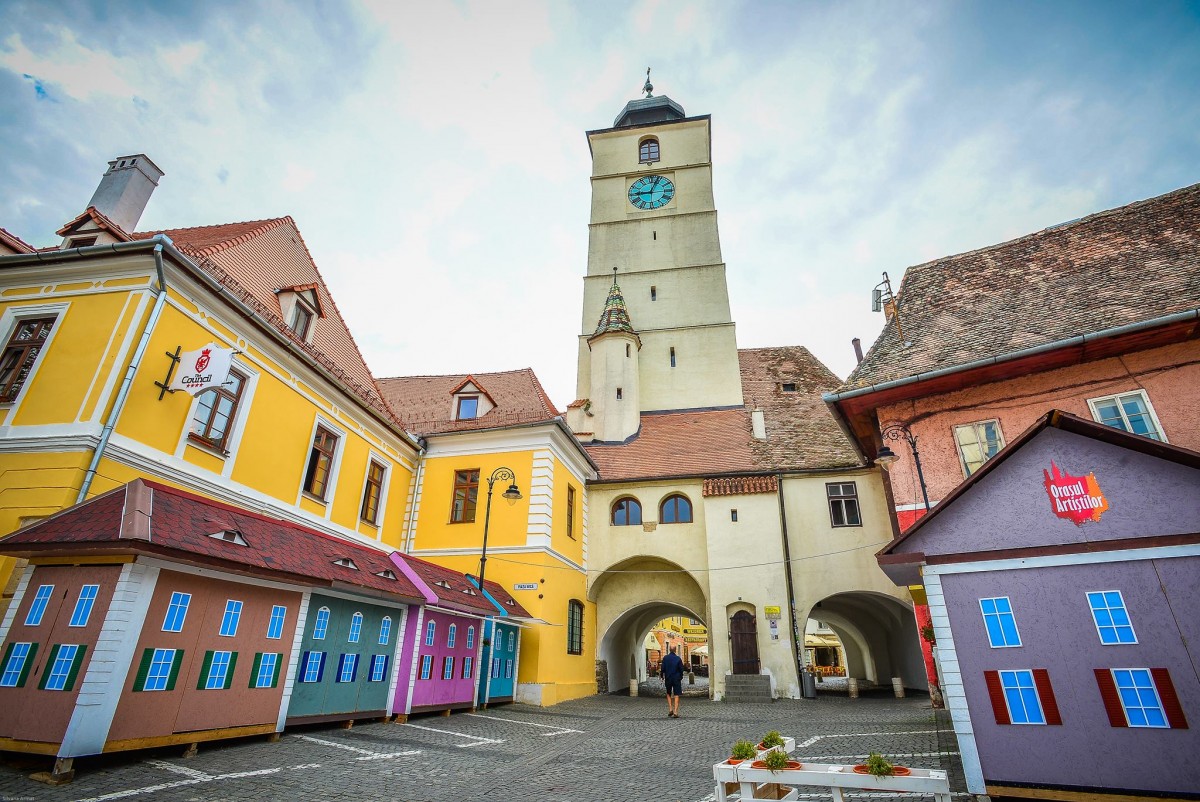
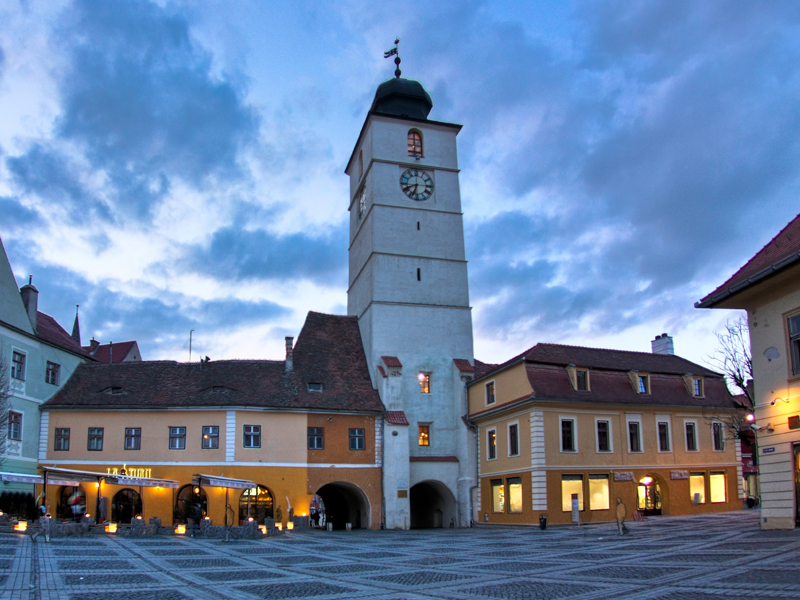
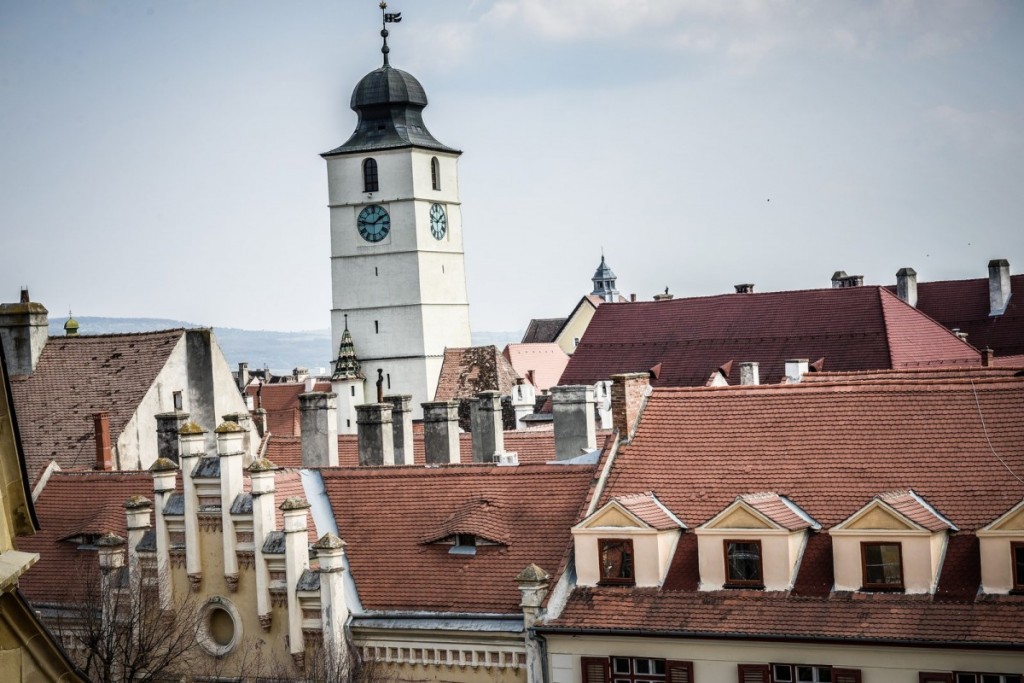
Originally built as a gateway to the city’s second fortification belt, the Council Tower in its current form retains only the core of the old building, up to the first floor, which dates from the thirteenth century. Meanwhile, it was rebuilt, heightened and incorporated into a group of buildings. The Council Tower has been renovated multiple times, its latest complete restoration taking place between 1961-1962. For the next 36 years, it hosted an exhibition of medieval objects belonging to the Brukenthal Museum.
The Council Tower connects the Great Square and the Small Square in Sibiu through a passage. The tower has served several purposes over time, as an access gate, grain depot, fire watch tower (from which fires could be observed and reported), prison and even a museum of natural sciences. Currently, this is an ideal place for organizing exhibitions, but also a viewpoint, as from the upper floor you can admire the whole city and the peaks of the Făgăraș mountains.
From an architectural point of view, the Council Tower is a seven-storey building, supported by high buttresses (masonry works designed to increase the external strength of a building or edifice, acting similarly to vaults or arches). On the southern side of the tower, the buttresses are adorned with two statues of lions, constructions specific to the Renaissance period at the end of the 16th century.
On the ground floor, there is a vaulted passage that connects the two squares; In time, this passage was copied in the structure of the adjacent building, in order to facilitate the circulation of the large flow of visitors of the old Sibiu. The access to the tower is made from the Small Square, on a small door; a spiral staircase leads visitors to the top floor, from where you can admire the panoramic view of Hermannstadt (the old name of Sibiu) and the Făgăraș mountains.