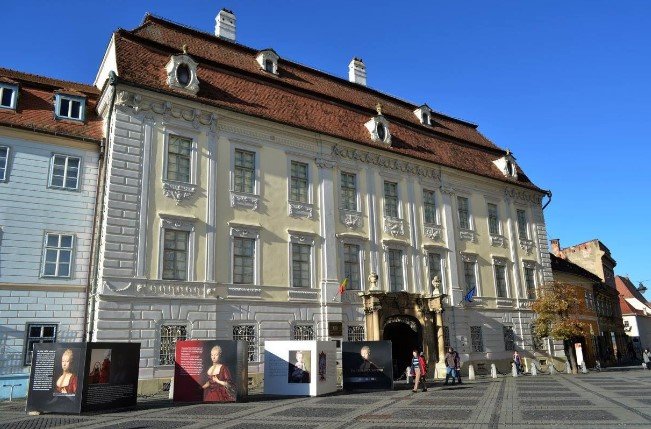

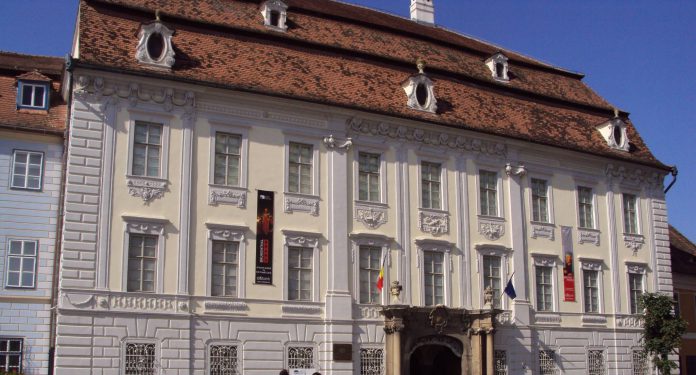
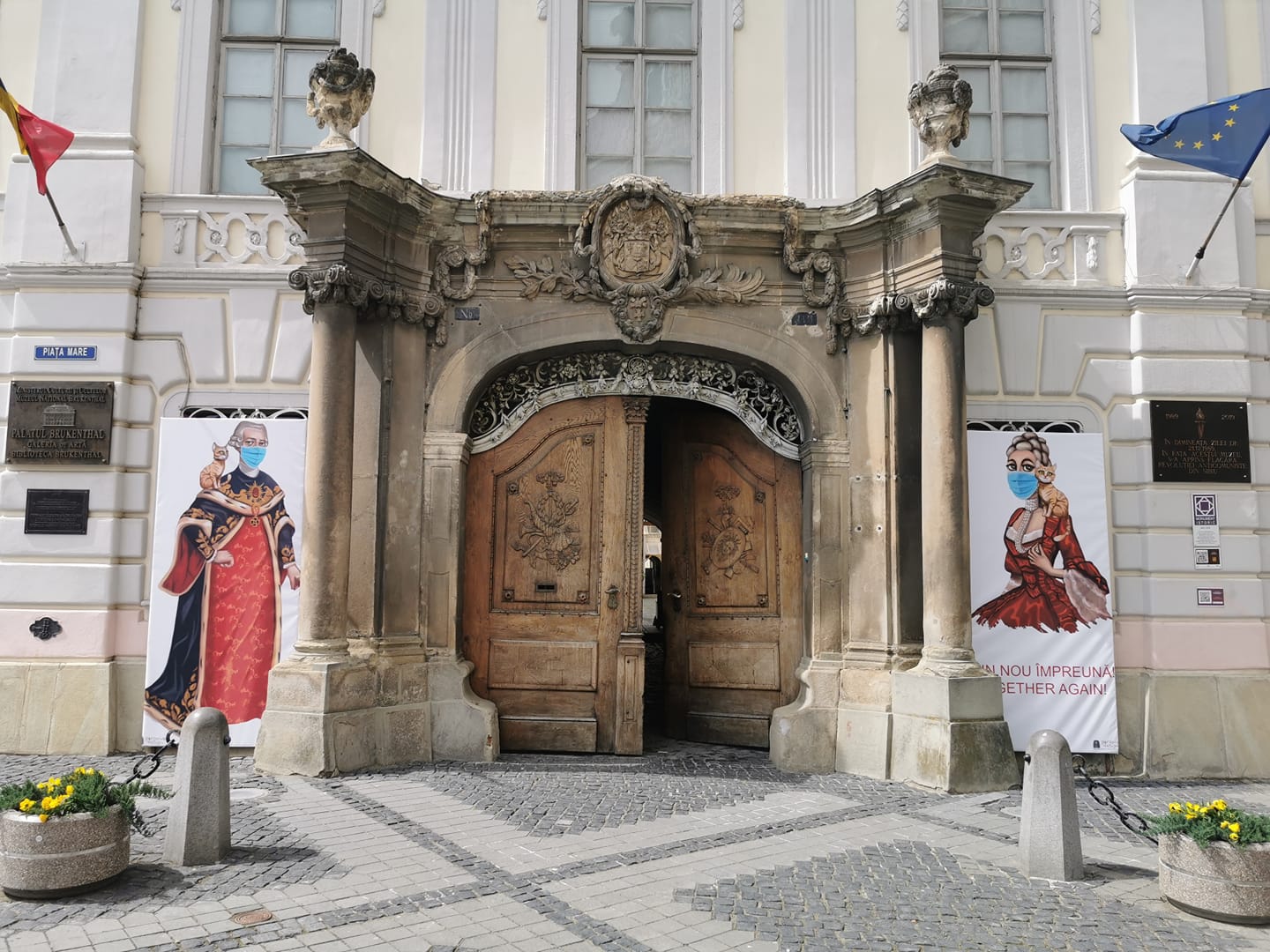
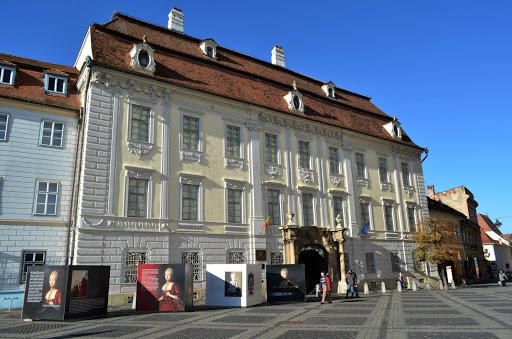
The Brukenthal museum is installed in the palace of Samuel von Brukenthal, governor of Sibiu between 1778 and 1787. The Brukenthal palace was constructed with respect to the baroque architecture and is located in the Grand Square of Sibiu. The palace was bequeathed to the people, so that they may enjoy the extensive art collection of the baron; this selfless gesture includes Samuel von Brukenthal among the representatives of the Enlightenment movement of the 18th century.
The palace became a public museum as of 1817 and is one of the few institutions of this type in Europe. The first masterpieces of the baron’s collection were purchased in Vienna in 1754 and can be admired today, as part of an exhibition containing around 1200 art works.
Throughout his life, Samuel von Brukenthal enriched his collection with articles from various art movements from the 15th century to the 18th century: the Flemish, Italian, German, Austrian, Spanish and French Renaissance, Baroque and Rococo styles. Two of the most valuable articles on display are made by the Flemish painter Peter Paul Rubens: “St. Ignacius of Loyola” and “St. Franciscus Xaverius”.
The Brukenthal art galleries are organized in sections dedicated to the European art, Romanian art and contemporary art. There is also an exhaustive library containing almost 300 thousand original works (manuscripts, rare prints, contemporary books and magazines of the 18th century).